
Publications whose subjects are Memphis and Shelby County, Tennessee.
-
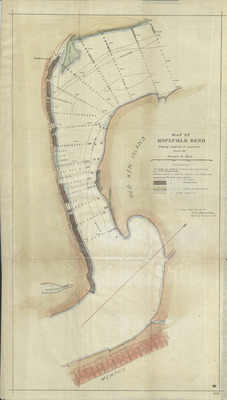
Map: President Island near Memphis, 1862
Plat of President Island near Memphis, Tennessee, January 14, 1862.
-
Map: South East Memphis, Tennessee, 1935
Map of Southeast Memphis, Tennessee, in 1935. The map is centered on the West Tennessee State Teachers College and is bounded by Walnut Grove, Goodlett, Park and Lafayette. The types of land use are color coded.
-
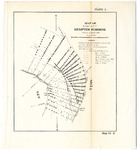
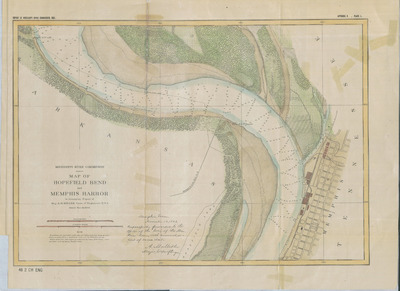
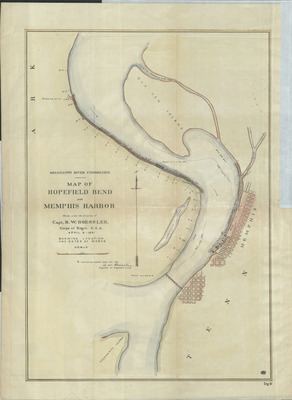
Map: Upper End of Memphis Harbor, 1891
Map of the Upper End of Memphis Harbor, Survey of April 1891. U.S. Army Corps of Engineers map.
-
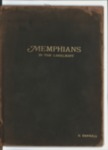
Memphians in the Limelight, circa 1911
A book of caricatures of leading men in Memphis, including lawyers, businessmen, politicians and officials, produced around 1911 by Roe S. Eastman and E.A. Vaughan and utilizing the talents of cartoonist George W. Curtis. The publisher was Paul & Douglass Company, Memphis. Each cartoon has a brief biography of the subject. This volume has "D. Darnell" embossed on the cover and Douglass Darnell, president of the Memphis Union Stockyards, is included in the book.
-
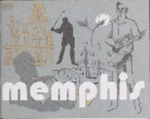
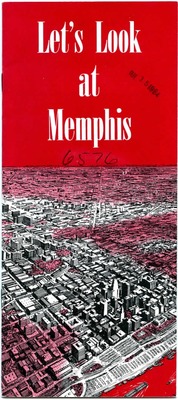
Memphis, 1970
Promotional brochure about the history, highlights and attractions of Memphis, Tennessee, published in 1970.
-
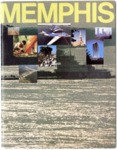
Memphis, 1978
Brochure published by Memphis Area Chamber of Commerce highlighting the history, population, economy, and infrastructure of Memphis, Tennessee, in 1978.
-

Memphis, 1981
A promotional booklet published by the Memphis Area Chamber of Commerce in 1981 extolling the advantages of the city of Memphis, Tennessee.
-
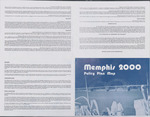
Memphis 2000 Policy Plan Map, 1981
Memphis 2000 Policy Plan Map published by the Memphis and Shelby County Office of Planning and Development, Memphis, Tennessee, in 1981. Included with 65-page booklet titled "Memphis 2000 Policy Plan".
-
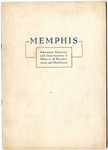
Memphis: Advantages, Resources and Opportunities it Offers to all Manufacturers and Distributors, 1921
A promotional booklet published by the Industrial Division of the Memphis Chamber of Commerce in 1921 titled "Memphis: Advantages, Resources and Opportunities it Offers to all Manufacturers and Distributors".
-

Memphis: A Short Historical Sketch, circa 1950
A 14-page booklet titled "Memphis: A Short Historical Sketch with a Summary of Important Dates" published by the Publicity Department of the Memphis Chamber of Commerce, Memphis, Tennessee, circa 1950.
-
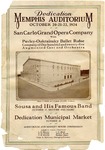
Memphis Auditorium Dedication program, October 1924
A 15-page booklet containing the program of performances held over four days in October 1924 to celebrate the opening of the Memphis Auditorium in Memphis, Tennessee. The featured artists were the San Carlo Grand Opera Company, the Pavley-Oukrainsky Ballet Russe, and John Phillip Sousa and his band.
-
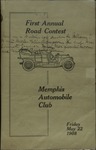
Memphis Automobile Club First Annual Road Contest, 1908
The rules of the first annual road contest held by the Memphis Automobile Club under the auspices of the Memphis Automobile Dealers' Association on Friday, May 22, 1908. The route from downtown Memphis south to State Line Road, then east to Germantown and Collierville, across to Macon and Cordova and then back to downtown Memphis, was expected to take nearly 7 hours with a stop for lunch.; The inscription on the cover reads: "Went in a Welch car driven by William T. B. with Uncle Bill Thompson, Mr and Mrs Emmett Joyner, Miss Marguerite Moon and Mr Fontaine Martin."
-
Memphis Avalanche, 1885
Vol. 28:307 of the "Memphis Avalanche" newspaper, Memphis, Tennesse, published on June 25, 1885.
-
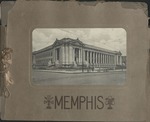
Memphis, circa 1915
A souvenir booklet published by E.H. Clarke and Brother of Memphis, Tennessee, containing 13 photographs of the city from around 1915. The views include city buildings, parks, and the West Tennessee State Normal School.
-

Memphis City Government, 1982
A 34-page booklet titled "Memphis City Government" published by the City Council of Memphis, Tennessee, in 1982. It explains the city government structure and presents its higher officials.
-
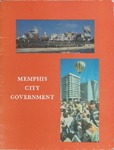
Memphis City Government, 1984
A 36-page booklet titled "Memphis City Government" published by the Memphis City Council, Memphis, Tennessee, in 1984 detailing its activities and staff.
-
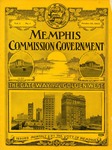
Memphis Commission Government, 1:01, 1912
Vol.1:1 of Memphis Commission Government published on October 25, 1912. It was a monthly publication produced by the City of Memphis under the new commission government established by E.H. Crump. He gained a state law in 1911 to establish a small commission to manage the city. Memphis retained a form of commission government until 1967. The publication was designed to show Memphians the benefits of the new form of government.
-
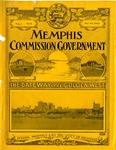
Memphis Commission Government, 1:02, 1912
Vol.1:2 of Memphis Commission Government published on November 25, 1912. It was a monthly publication produced by the City of Memphis under the new commission government established by E.H. Crump. He gained a state law in 1911 to establish a small commission to manage the city. Memphis retained a form of commission government until 1967. The publication was designed to show Memphians the benefits of the new form of government.
-
Memphis Commission Government, 1:04, 1913
Vol.1:4 of Memphis Commission Government published on January 25, 1913. It was a monthly publication produced by the City of Memphis under the new commission government established by E.H. Crump. He gained a state law in 1911 to establish a small commission to manage the city. Memphis retained a form of commission government until 1967. The publication was designed to show Memphians the benefits of the new form of government.
-
Memphis Commission Government, 1:05, 1913
Vil.1:5 of Memphis Commission Government published on February 25, 1913. It was a monthly publication produced by the City of Memphis under the new commission government established by E.H. Crump. He gained a state law in 1911 to establish a small commission to manage the city. Memphis retained a form of commission government until 1967. The publication was designed to show Memphians the benefits of the new form of government.
-
Memphis Commission Government, 1:06, 1913
Vol.1:6 of Memphis Commission Government published on March 25, 1913. It was a monthly publication produced by the City of Memphis under the new commission government established by E.H. Crump. He gained a state law in 1911 to establish a small commission to manage the city. Memphis retained a form of commission government until 1967. The publication was designed to show Memphians the benefits of the new form of government.
-
Memphis Commission Government, 1:07, 1913
Vol.1:7 of Memphis Commission Government published in April 1913. It was a monthly publication produced by the City of Memphis under the new commission government established by E.H. Crump. He gained a state law in 1911 to establish a small commission to manage the city. Memphis retained a form of commission government until 1967. The publication was designed to show Memphians the benefits of the new form of government.
-
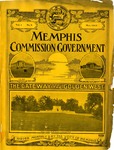
Memphis Commission Government, 1:08, 1913
Vol.1:8 of Memphis Commission Government published in May 1913. It was a monthly publication produced by the City of Memphis under the new commission government established by E.H. Crump. He gained a state law in 1911 to establish a small commission to manage the city. Memphis retained a form of commission government until 1967. The publication was designed to show Memphians the benefits of the new form of government.
-
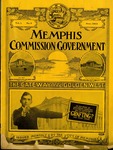
Memphis Commission Government, 1:09, 1913
Vol.1:9 of Memphis Commission Government published in June 1913. It was a monthly publication produced by the City of Memphis under the new commission government established by E.H. Crump. He gained a state law in 1911 to establish a small commission to manage the city. Memphis retained a form of commission government until 1967. The publication was designed to show Memphians the benefits of the new form of government.